
Ninewin Blackjack Basic Strategy Chart Use
- Why the Basic Strategy Chart is Essential at Ninewin
- Step-by-Step: How to Read and Apply the Ninewin Chart
- Common Mistakes Players Make with the Chart
- RTP and House Edge: The Numbers You Need to Know
- Payment Methods and Table Limits for Blackjack at Ninewin
- Getting the Most from Your Ninewin Bonus While Using the Chart
Why the Basic Strategy Chart is Essential at Ninewin
Playing blackjack without a basic strategy chart is like navigating a foreign city without a map. The chart removes guesswork and guarantees the mathematically correct move for every hand. At Ninewin, where you can play multiple blackjack variants, using a chart is the single most effective way to cut the house edge. The standard basic strategy reduces the casino’s advantage to roughly 0.5% – far lower than the 2-3% you would face by relying on instinct. Many players underestimate how much small errors add up. A single wrong decision on a 16 vs. dealer 10 can cost you 0.4% of your total wager over the long run. With the chart, those errors disappear. Ninewin casino offers several blackjack tables with varying rules, but the core strategy remains the same. Whether you play classic, European, or single‑deck blackjack, a well‑studied chart keeps your decisions consistent and profitable.
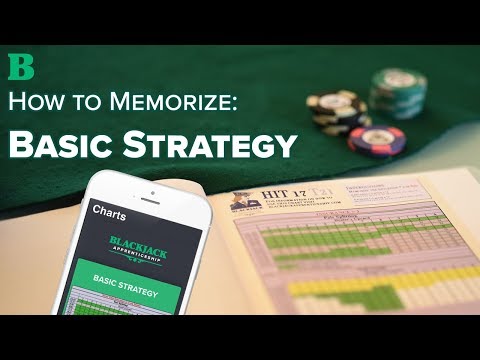
Step-by-Step: How to Read and Apply the Ninewin Chart
The chart is typically a grid: your hand along the left column, the dealer’s upcard along the top row. The intersection tells you whether to Hit, Stand, Double Down, Split, or Surrender. Here is a quick walkthrough:
- Know your hand total. Identify if it is hard (no Ace or Ace counted as 1) or soft (Ace counted as 11).
- Check the dealer’s upcard. This is the only card you see; the hole card is unknown.
- Find the correct cell. For example, with a hard 16 against a dealer 10, the chart says “Hit” – even though many players stand out of fear.
- Execute the action. Always follow the chart, even if it feels counterintuitive. The math behind it has been proven over billions of simulated hands.
- Repeat for every hand. In multi‑deck games, the chart is identical except for slight adjustments when surrender is available. At ninewin, you can toggle surrender on some tables – always check the rules.
The entire process takes under two seconds per hand once you are familiar with the layout. For beginners, keep the chart open on a second device or print it out. Many experienced players still refer to it; there is no shame in using a tool that literally pays for itself.
Common Mistakes Players Make with the Chart
Even with a chart in hand, errors creep in. The most frequent is misreading the dealer’s upcard – an Ace is not the same as a 10. Another is forgetting that the chart changes when the dealer stands on soft 17 vs. hits. At Ninewin, most tables use dealer stands on soft 17 (S17), which gives you a slightly better edge. A third mistake is deviating from the chart because of a “hunch”. This is where the house makes its money. Here is a list of specific traps to avoid:
- Standing on 12 against a dealer 2 or 3 – the chart says hit.
- Splitting 10s – never do it, even if the dealer shows a 6.
- Doubling on soft 13 or 14 against a dealer 5 or 6 – correct only when the chart says so.
- Using the same chart for different rule sets – always verify the specific game’s rules at the table.
If you catch yourself second‑guessing the chart, stop and trust the science. Over 10,000 hands, followers of the chart will lose significantly less than those who play by feel.
RTP and House Edge: The Numbers You Need to Know
The theoretical return‑to‑player (RTP) for blackjack with basic strategy is around 99.5% when using perfect play. This means for every $100 wagered, the expected loss is only $0.50. Without the chart, RTP drops to about 97-98% – a massive difference over time. Ninewin’s blackjack tables typically offer RTP of 99.5% or higher, depending on the variant. The exact house edge is influenced by the number of decks, whether the dealer hits or stands on soft 17, and if doubling after splitting is allowed. For example, a six‑deck game with S17 and DAS yields a house edge of 0.39% with perfect strategy. When you use the chart, you are playing the game as close to break‑even as legally possible.
Payment Methods and Table Limits for Blackjack at Ninewin
Playing blackjack with a chart is only half the battle – you also need a smooth banking experience. Ninewin supports major deposit and withdrawal methods that work seamlessly with table play. Below is a breakdown of typical options:
| Method | Min Deposit | Withdrawal Time | Fees |
|---|---|---|---|
| Visa / Mastercard | $10 | 2–5 business days | None |
| Skrill / Neteller | $10 | 24 hours | None |
| Bitcoin / USDT | $20 | 1–3 hours | None |
| Bank Transfer | $25 | 3–7 business days | May apply |
Table limits for blackjack at Ninewin start at $1 and go up to $5,000 for high rollers. The lower limits are perfect for practicing with the chart without risking much. Always ensure your deposit method is eligible for the Ninewin bonus you intend to use – more on that next.
Getting the Most from Your Ninewin Bonus While Using the Chart
Bonuses can amplify your bankroll, but they also come with wagering requirements. The Ninewin bonus, for instance, often includes a 35x playthrough. Blackjack usually contributes only 10-20% toward this requirement, so you need to factor that in. A Ninewin no deposit bonus is ideal for testing the chart without risking your own money – just meet the wagering before withdrawing. Use a Ninewin promo code when signing up to unlock extra perks. And while Ninewin free spins are typically for slots, you can combine them with a cash bonus that you then use on blackjack tables. The key is to always read the terms: some bonuses exclude blackjack entirely, while others allow it with reduced weight. By sticking to the chart, you minimise variance and maximise the chance of turning bonus funds into withdrawable cash.
You can access the full blackjack rules and strategy details at https://ninewin.london/.

Leave a Reply
Want to join the discussion?Feel free to contribute!